
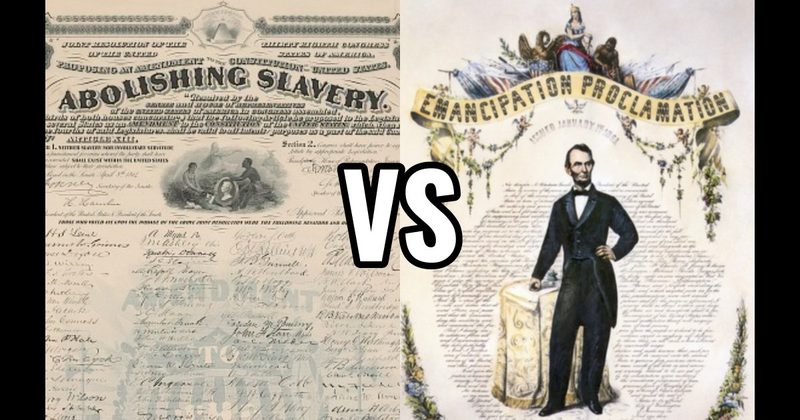
Emancipation Proclamation (1863) vs Thirteenth Amendment (1865)
Thirteenth Amendment (1865) leads with 52% of votes
Latest odds: Thirteenth Amendment (1865) - 55%, Emancipation Proclamation (1863) - 45%
Emancipation Proclamation (1863) = Wartime executive boldness
Thirteenth Amendment (1865) = Permanent abolition, broad acceptance
See full U.S. Legislation rankings →Pick Your Favorite
VS
Your GOAT List
The Real Debate
The Thirteenth Amendment officially abolished slavery throughout the United States, making a permanent change that the Emancipation Proclamation only temporarily addressed in rebelling states. Witness the clash of legacy versus immediate impact as these two titans of U.S. legislation battle it out in the arena of history and politics. Fans are fiercely divided; the Amendment's broad, undeniable sweep of justice contrasts sharply with the Proclamation's bold, war-time move that paved the way. This matchup isn't just a debate—it's a showdown of foundational change versus strategic action. Whose side are you on in this historical heavyweight fight?
Head-to-Head Comparison
| Criteria | Edge | Why |
|---|---|---|
| Impact Scale | Thirteenth Amendment (1865) | While the Emancipation Proclamation was monumental, the Thirteenth Amendment abolished slavery across the entire country, permanently altering the national legal landscape. |
| Bipartisan Support | Thirteenth Amendment (1865) | The Thirteenth Amendment, passing through both legislative houses and requiring ratification by the states, garnered broader bipartisan support compared to the Emancipation Proclamation, which was an executive order. |
| Policy Innovation | Emancipation Proclamation (1863) | The Emancipation Proclamation was a pioneering use of executive power aimed at freeing slaves in rebellious states, fundamentally changing wartime policies. |
| Public Approval | Thirteenth Amendment (1865) | Although both faced mixed reactions, the Thirteenth Amendment’s permanent abolition of slavery eventually received higher public approval due to its comprehensive and unequivocal nature. |
🔥 Fan Takes
How Fans Are Voting
Latest battle odds:
Thirteenth Amendment (1865): 55%
Emancipation Proclamation (1863): 45%
Overall battle results:
Overall fans prefer Thirteenth Amendment (1865) over Emancipation Proclamation (1863) when it comes to the greatest U.S. Legislation of all time. In head-to-head matchups, fans pick Thirteenth Amendment (1865) 52.2% of the time over Emancipation Proclamation (1863).
Across all battles:
Thirteenth Amendment (1865) win rate: 52.2%
Emancipation Proclamation (1863) win rate: 44.6%
Fan FAQs
Why is this matchup between the Thirteenth Amendment and the Emancipation Proclamation such a big debate?
It's a clash of monumental legacies! Both are iconic in the fight for freedom, but they represent different milestones, and fans are split on which had a more profound impact.
What makes the Emancipation Proclamation so popular?
The Emancipation Proclamation is loved for its boldness! It set the stage for freedom and resonates emotionally with fans who appreciate its groundbreaking impact on civil rights.
Why is the Thirteenth Amendment leading the vote right now?
Fans are really connecting with the Thirteenth Amendment's historic significance in abolishing slavery. It's like this sense of closure and triumph that has people rallying behind it!