
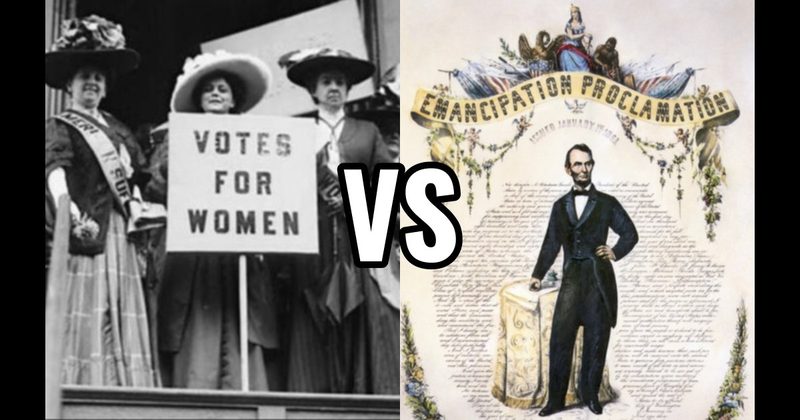
Emancipation Proclamation (1863) vs Nineteenth Amendment (1920)
Emancipation Proclamation (1863) leads with 65% of votes
Latest odds: Emancipation Proclamation (1863) - 64%, Nineteenth Amendment (1920) - 36%
Emancipation Proclamation (1863) = Radical wartime liberation
Nineteenth Amendment (1920) = Pioneering democratic inclusivity
See full U.S. Legislation rankings →Pick Your Favorite
VS
Your GOAT List
The Real Debate
The Nineteenth Amendment granted women the right to vote in 1920, starkly contrasting the Emancipation Proclamation which declared the freedom of slaves in Confederate states in 1863. This battle slices through the heart of U.S. political and social evolution, pitting the seismic shift toward gender equality against the crusade to abolish slavery. Fans are fiercely divided, with loyalists on both sides championing their cause as the cornerstone of liberty and justice. Is it the vote that echoes louder or the proclamation of freedom that has shaped America more profoundly? Dive into this historical clash and cast your vote to decide which legacy holds the supreme power in shaping our nation.
Head-to-Head Comparison
| Criteria | Edge | Why |
|---|---|---|
| Impact Scale | Emancipation Proclamation (1863) | The Emancipation Proclamation fundamentally altered the social structure of the southern states and had a profound effect on the course of the Civil War, impacting the nation on a massive scale. |
| Bipartisan Support | Nineteenth Amendment (1920) | The Nineteenth Amendment garnered more clear bipartisan support, ultimately achieving ratification through the approval of both Republican and Democratic states. |
| Policy Innovation | Nineteenth Amendment (1920) | Establishing women's right to vote across the entire United States represented a monumental leap in policy, redefining civic participation and democracy. |
| Public Approval | Nineteenth Amendment (1920) | While both were controversial, the Nineteenth Amendment reflects a more prolonged public campaign and greater transformation in public consensus before its passage. |
🔥 Fan Takes
How Fans Are Voting
Latest battle odds:
Emancipation Proclamation (1863): 64%
Nineteenth Amendment (1920): 36%
Overall battle results:
Overall fans prefer Emancipation Proclamation (1863) over Nineteenth Amendment (1920) when it comes to the greatest U.S. Legislation of all time. In head-to-head matchups, fans pick Emancipation Proclamation (1863) 65.9% of the time over Nineteenth Amendment (1920).
Across all battles:
Emancipation Proclamation (1863) win rate: 44.6%
Nineteenth Amendment (1920) win rate: 30.0%
Fan FAQs
Why is this matchup between the Emancipation Proclamation and the Nineteenth Amendment such a heated debate?
It's a classic clash of historical giants! One's all about abolishing slavery while the other’s fighting for women's suffrage, so passionate fans on both sides are really going at it, making for an intense showdown.
Why do folks rally behind the Nineteenth Amendment?
The Nineteenth Amendment really resonates with fans because it represents a major leap for women's rights and empowerment. People love the idea of breaking barriers and how it paved the way for future generations!
What makes the Emancipation Proclamation such a big deal right now?
Fans are totally vibing with the Emancipation Proclamation's legacy of freedom and its huge impact on civil rights. Plus, it’s leading the vote, likely because people still feel the weight of its historical significance today!