
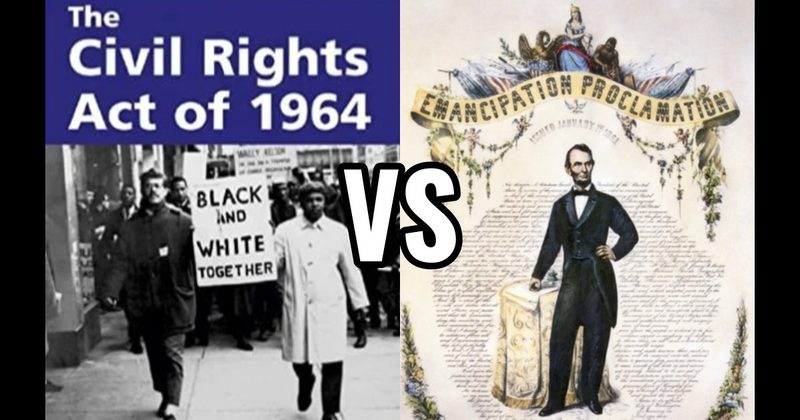
Civil Rights Act (1964) vs Emancipation Proclamation (1863)
Civil Rights Act (1964) leads with 66% of votes
Latest odds: Civil Rights Act (1964) - 40%, Emancipation Proclamation (1863) - 60%
Civil Rights Act (1964) = Transformative societal legislation
Emancipation Proclamation (1863) = Revolutionary executive action
See full U.S. Legislation rankings →Pick Your Favorite
VS
Your GOAT List
The Real Debate
The Civil Rights Act of 1964 revolutionized societal norms by banning discrimination based on race, color, religion, sex, or national origin, stepping beyond the Emancipation Proclamation of 1863, which largely focused on abolishing slavery in Confederate states. This battle pits the broad, societal overhaul against a targeted strike at the institution of slavery, sparking fierce debates among fans about which action had the deeper impact. Loyalists of the Emancipation Proclamation argue its foundational role in ending slavery, while supporters of the Civil Rights Act applaud its sweeping reform across American life. The clash isn't just historical; it's about which document carries the torch forward in today's ongoing fight for equality. Which side are you on? Cast your vote and sway the legacy!
Head-to-Head Comparison
| Criteria | Edge | Why |
|---|---|---|
| Impact Scale | Civil Rights Act (1964) | The Civil Rights Act transformed societal structures across the entire United States, prohibiting discrimination and setting the stage for further equality measures. |
| Bipartisan Support | Civil Rights Act (1964) | The Civil Rights Act passed with substantial bipartisan support, reflecting a wide political consensus unlike the contentious context of the Emancipation Proclamation. |
| Policy Innovation | Emancipation Proclamation (1863) | The Emancipation Proclamation was a groundbreaking use of executive power that directly challenged the institution of slavery, setting a precedent for using such powers in matters of human rights. |
| Public Approval | Emancipation Proclamation (1863) | Though controversial at the time, the Emancipation Proclamation garnered significant public approval amongst the Union states, symbolizing a powerful moral and political stance against slavery. |
🔥 Fan Takes
How Fans Are Voting
Latest battle odds:
Emancipation Proclamation (1863): 60%
Civil Rights Act (1964): 40%
Overall battle results:
Overall fans prefer Civil Rights Act (1964) over Emancipation Proclamation (1863) when it comes to the greatest U.S. Legislation of all time. In head-to-head matchups, fans pick Civil Rights Act (1964) 66.7% of the time over Emancipation Proclamation (1863).
Across all battles:
Civil Rights Act (1964) win rate: 52.6%
Emancipation Proclamation (1863) win rate: 44.6%
Fan FAQs
What makes the Civil Rights Act such a popular contender in GoatWars?
The Civil Rights Act represents a fight against discrimination, igniting emotions and strong affiliations among fans who value social justice. Its legacy of progress speaks volumes, making it an iconic piece of legislation that many feel passionately about.
What do fans love about the Emancipation Proclamation?
The Emancipation Proclamation is cherished for its bold step toward freedom, and fans appreciate its dramatic impact on American history. It feels like a powerful symbol of hope and change, which keeps it close to many hearts.
Why is the Civil Rights Act winning by so much?
Fans are rallying behind the Civil Rights Act because it symbolizes a major turning point for equality and justice in America. The nostalgia and cultural impact it carries just seem to resonate more with the current vibe.