
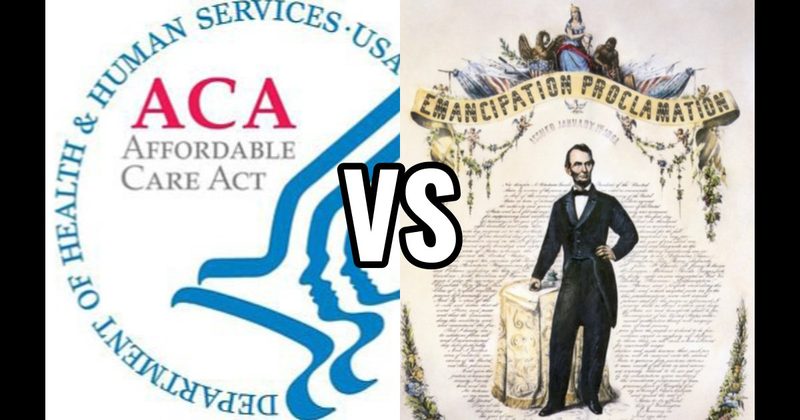
Affordable Care Act (2010) vs Emancipation Proclamation (1863)
Emancipation Proclamation (1863) leads with 83% of votes
Latest odds: Emancipation Proclamation (1863) - 91%, Affordable Care Act (2010) - 9%
Affordable Care Act (2010) = Revolutionizing modern healthcare
Emancipation Proclamation (1863) = Historic moral milestone
See full U.S. Legislation rankings →Pick Your Favorite
VS
Your GOAT List
The Real Debate
The Affordable Care Act of 2010 sought to overhaul a complex healthcare system, aiming to extend insurance coverage to millions, while the Emancipation Proclamation of 1863 struck at the heart of slavery, promising freedom in the rebellious states during the Civil War. Here lies a fierce GoatWars showdown between transformative societal reform and a bold declaration for human rights. On one side, the ACA ignites debates on modern healthcare nuances; on the other, the Proclamation echoes a historical battle for personal liberty. This matchup is not just a legal ledger but a clash of epoch-defining movements. Who shaped America more? You decide!
Head-to-Head Comparison
| Criteria | Edge | Why |
|---|---|---|
| Impact Scale | Emancipation Proclamation (1863) | The Emancipation Proclamation was a pivotal document in U.S. history, fundamentally altering the legal status of slaves and becoming a cornerstone for civil rights movements. |
| Bipartisan Support | Emancipation Proclamation (1863) | While deeply divisive, the Emancipation Proclamation was issued during wartime, transcending typical party lines and receiving broad historical endorsement for its moral imperatives. |
| Policy Innovation | Emancipation Proclamation (1863) | Issuing the Emancipation Proclamation during the Civil War was a radical step towards social justice, using wartime powers for a moral cause in an unprecedented way. |
| Public Approval | Affordable Care Act (2010) | Despite its controversial aspects, the Affordable Care Act managed to gain a substantial public following, thanks to its direct impact on millions of Americans' healthcare. |
🔥 Fan Takes
How Fans Are Voting
Latest battle odds:
Emancipation Proclamation (1863): 91%
Affordable Care Act (2010): 9%
Overall battle results:
Overall fans prefer Emancipation Proclamation (1863) over Affordable Care Act (2010) when it comes to the greatest U.S. Legislation of all time. In head-to-head matchups, fans pick Emancipation Proclamation (1863) 83.3% of the time over Affordable Care Act (2010).
Across all battles:
Emancipation Proclamation (1863) win rate: 44.6%
Affordable Care Act (2010) win rate: 7.1%
Fan FAQs
What's the deal with the rivalry between the Affordable Care Act and the Emancipation Proclamation?
It's a clash of eras and issues! On one side, you have civil rights and freedom, while on the other, healthcare access. Fans are split, making it a tense yet exciting battle of ideals.
What do fans love about the Affordable Care Act?
Many appreciate the ACA for its push towards accessible healthcare, seeing it as a crucial step for millions. Plus, the debates around it have sparked passionate conversations about health and rights!
Why is the Emancipation Proclamation winning by so much?
Fans are really drawn to its historical significance and emotional weight; it’s a game-changer that reshaped the nation. The legacy it carries just hits deep for so many people.