
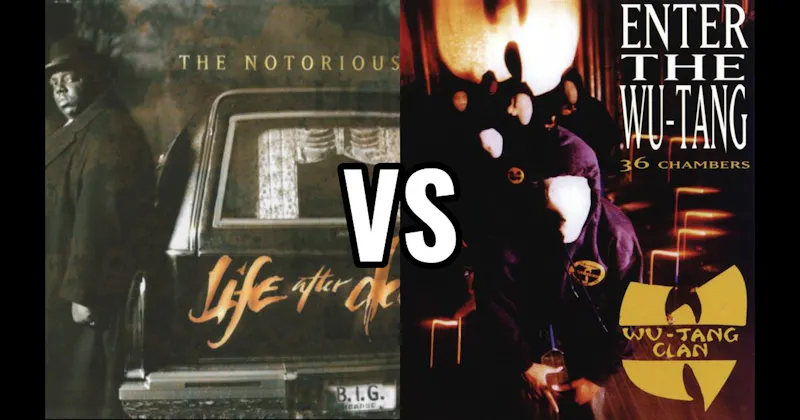
Enter the Wu-Tang (36 Chambers) vs Life After Death
Enter the Wu-Tang (36 Chambers) leads with 66% of votes
Latest odds: Enter the Wu-Tang (36 Chambers) - 53%, Life After Death - 47%
Enter the Wu-Tang (36 Chambers) = Raw sounds, trend-setting
Life After Death = Story-rich, complex rhymes
See full Rap Album rankings →Pick Your Favorite
VS
Your GOAT List
The Real Debate
While 'Life After Death' from Notorious B.I.G. offers a sprawling double album filled with polished storytelling and slick production, 'Enter the Wu-Tang (36 Chambers)' by Wu-Tang Clan throws down with raw, unfiltered energy and groundbreaking group dynamics. This GoatWars battle taps into the heart of hip-hop debates: the sleek, cinematic scope of Biggie's opus against the gritty, revolutionary punch of the Wu-Tang's debut. Fans are torn between the lush narratives of Biggie and the aggressive, innovative beats that introduced the world to the RZA’s genius and the raw talent of the Clan. It's a classic showdown of intricate lyricism versus hardcore, street-smart rawness. Which side of hip-hop history do you stand on? Cast your vote!
Head-to-Head Comparison
| Criteria | Edge | Why |
|---|---|---|
| Lyricism | Life After Death | Life After Death exhibits intricate storytelling with diverse, complex rhyme schemes, pushing it slightly ahead. |
| Production Quality | Enter the Wu-Tang (36 Chambers) | Enter the Wu-Tang's raw, minimalistic beats created a distinct soundscape that reshaped the genre. |
| Innovation | Enter the Wu-Tang (36 Chambers) | Wu-Tang's blended use of martial arts samples and group dynamics broke new ground in hip-hop. |
| Cultural Impact | Enter the Wu-Tang (36 Chambers) | The album spearheaded an entire movement, profoundly influencing both music and street fashion. |
🔥 Fan Takes
How Fans Are Voting
Latest battle odds:
Enter the Wu-Tang (36 Chambers): 53%
Life After Death: 47%
Overall battle results:
Overall fans prefer Enter the Wu-Tang (36 Chambers) over Life After Death when it comes to the greatest Rap Albums of all time. In head-to-head matchups, fans pick Enter the Wu-Tang (36 Chambers) 66.7% of the time over Life After Death.
Across all battles:
Enter the Wu-Tang (36 Chambers) win rate: 48.6%
Life After Death win rate: 39.7%
Fan FAQs
What's shaping this head-to-head battle in the Greatest Rap Albums league?
This matchup pits raw, group dynamics against slick, solo storytelling. Fans of old-school, hardcore rap rally behind Enter the Wu-Tang, while those who appreciate polished narratives and crossover hits lean towards Life After Death. The contrasting styles and fanbases make this debate super heated!
What makes Life After Death still loved by fans?
Life After Death captures Biggie's storytelling prowess and smooth flow, which really hits home for a lot of fans. Its blend of hardcore and commercial appeal, with hits like 'Hypnotize' and 'Mo Money Mo Problems,' keeps it a staple in many fans' hearts.
Why is Enter the Wu-Tang (36 Chambers) leading over Life After Death in the Greatest Rap Albums of All Time league?
Fans are really feeling the raw energy and innovation of Enter the Wu-Tang (36 Chambers). Its impact on hip hop with those gritty, street-smart beats and ensemble rhymes seems to resonate more compared to the more polished, narrative-driven style of Life After Death.